Home › Applications
Applications
Which strainer fits is decided by the medium and by what it has to protect. The following pages show for each medium which strainer type makes sense, what matters in the design and which options go with it.

nine fields of application
based on the protected component
Basket · Simplex · Duplex · T-type · Pot type · Y
17 option topics
The most common question in enquiries concerns the mesh size for a particular medium. Technically, the right question is the reverse: what is the strainer meant to protect? A pump tolerates different particles than a spray nozzle, a plate heat exchanger different ones than a control valve. The narrower the openings downstream, the finer the screen.
The medium, in turn, determines other things: the material, the strainer type, the gasket and whether heating or insulation is needed. With viscous media, an additional rule applies that surprises many. The more viscous the medium, the coarser the screen is selected – otherwise the pressure drop becomes unmanageable.
That is why these pages are sorted by medium but always lead to the protected component: each one names the points of use where it is typically needed. Tell us both – the medium and what is downstream – and we will do the design.
Each page describes the points of use, the suitable strainer type and the proven options.

Low dirt load, high temperature: the Y strainer is usually sufficient, and the gasket is decisive.
To the application →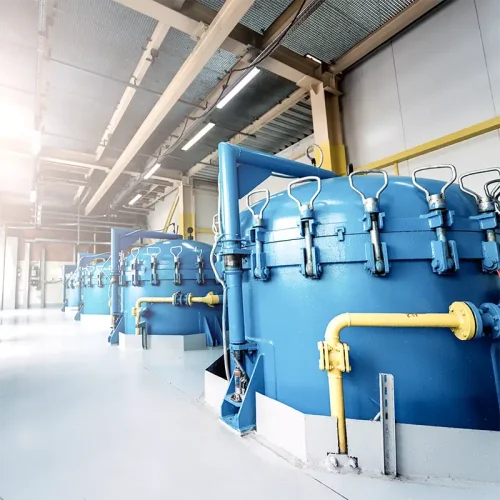
From pre-filtration for reverse osmosis to drinking water systems – the largest media group in strainer manufacturing.
To the application →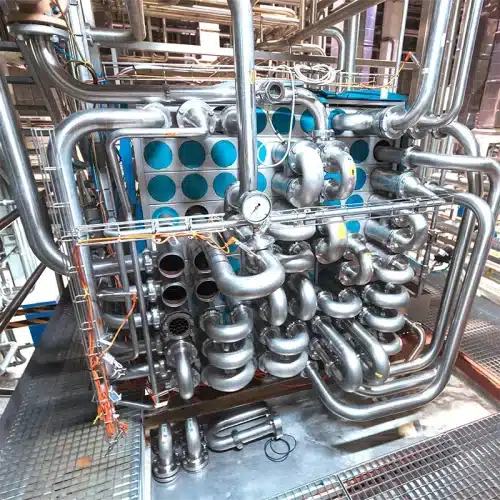
Plate heat exchangers are sensitive to particles; in heating circuits there is also magnetite, which no wire mesh retains.
To the application →
The more viscous the medium, the coarser the screen and the more important the heating jacket and quick opening.
To the application →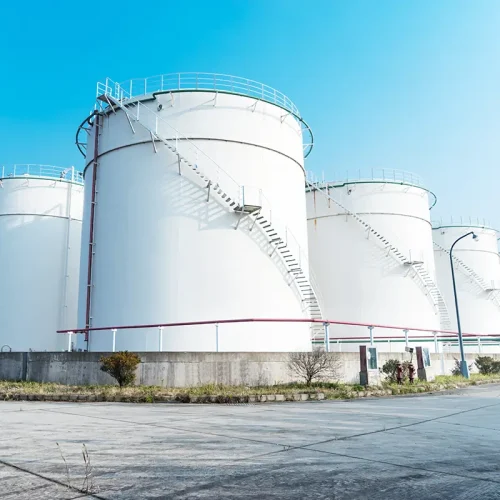
Fine filtration grades, carbon steel housings and requirements from TA Luft and explosion protection.
To the application →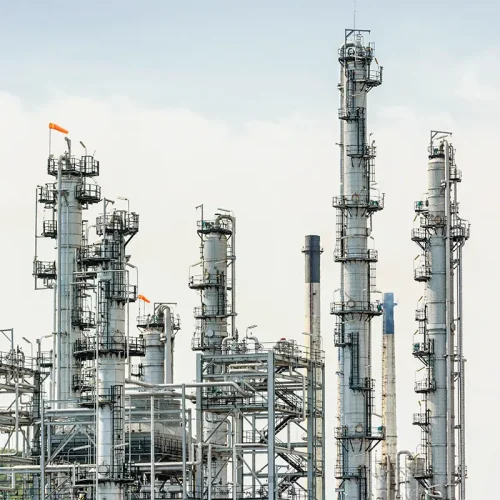
Here it is not the mesh size that decides, but material compatibility – up to Hastelloy and Monel.
To the application →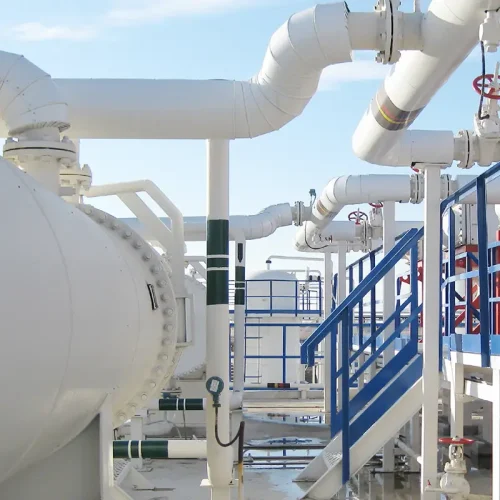
Gases carry little dirt but require the finest wire mesh and tight closures.
To the application →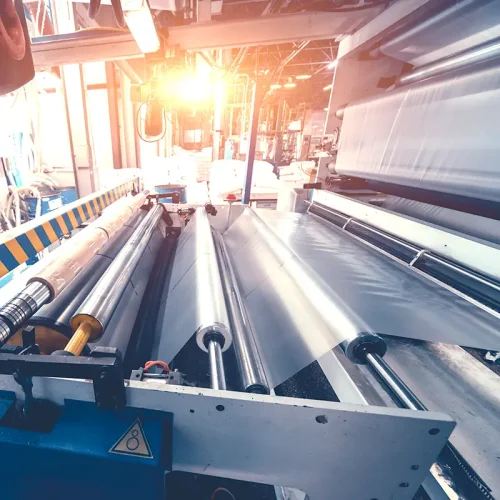
Large screen area, robust elements and quick access for cleaning – or the changeover duplex strainer right away.
To the application →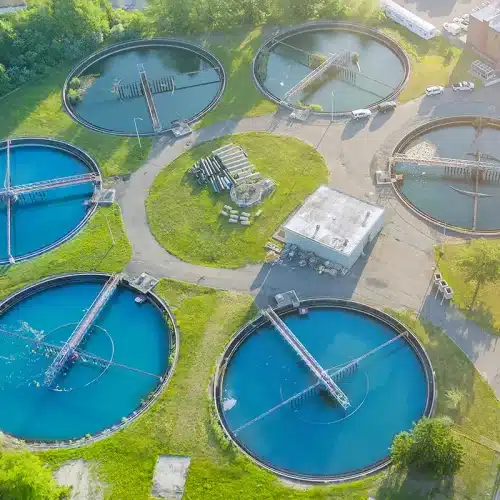
The coarsest mesh sizes, high dirt load, fibre and solids content – strainer type and access are decisive.
To the application →For a reliable design we need little: the medium with operating temperature and pressure, and the component to be protected with its smallest opening. From this we derive everything else: mesh size, screen area, strainer type, material and options. If flow rate and installation situation are added, the design becomes a quotation with drawing.
The question is technically misleading – what matters is what the strainer is meant to protect. A rule of thumb from practice: the screen opening is chosen at about half the size of the largest particle that may still pass. Tell us the protected component and we will calculate it.
No. Mesh size is a geometric measure – the clear distance between two wires. An elongated particle can still pass through if it is suitably oriented. Ratings in “µm absolute” belong to fine filtration with bag or cartridge filters. For basket strainers, duplex strainers and Y and pot type strainers, the mesh size in millimetres is the technically correct specification.
Because the pressure drop increases with viscosity. A fine screen that is unremarkable with water makes the plant inoperable with oil or syrup. With viscous media, a coarser screen is therefore selected, the housing is designed larger and usually heated – and the design is made at operating temperature, not at 20 °C.
As a guide: with a low dirt load, the Y strainer is sufficient. As the dirt load rises, the pot design provides considerably more screen area – basket or simplex strainer. If the plant must not stop for cleaning, it will be the changeover duplex strainer. Each media page gives the recommendation in context.
Yes. The nine pages cover the most common cases; we do the design for any medium. Tell us the composition, temperature, pressure and viscosity – for aggressive media also the concentration, because the choice of material depends on it.
All topics at a glance: Strainer options and accessories · The types: Industrial strainers
Tell us the medium, operating data and the component to be protected – you will receive a design proposal with strainer type, mesh size and options.