Paddle spacer · Ring spacer
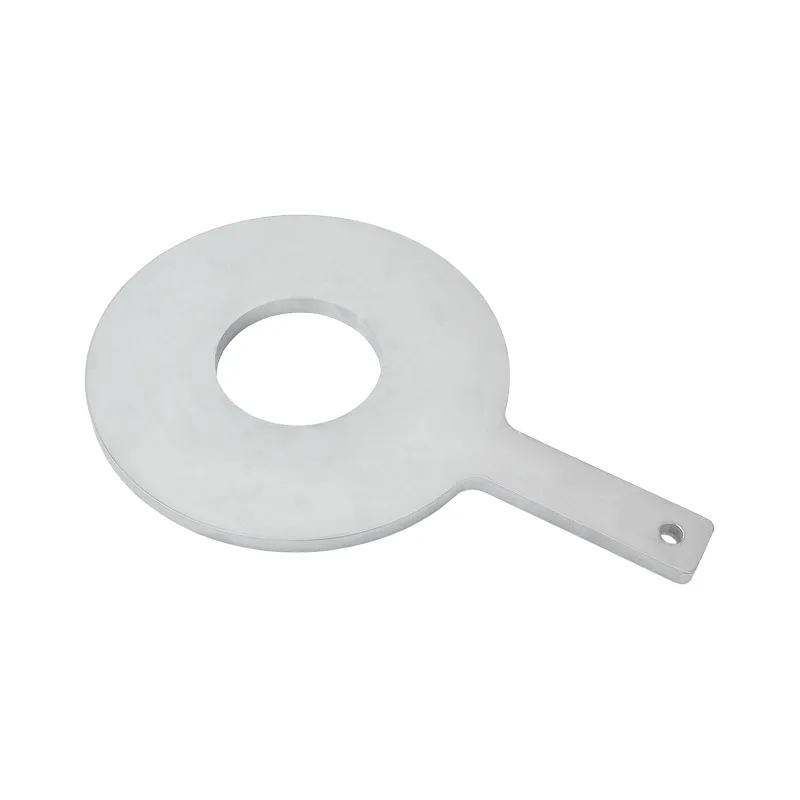
The paddle spacer is a ring with a full bore, also known as a ring spacer or open spacer. It is inserted between two flanges. A paddle spacer in the pipeline changes nothing in the flow – and that is exactly its purpose.
The paddle spacer keeps free the space left by the removed spade blind. Without it, the flanged joint lacks the overall height. The bolts engage differently, and the gasket no longer sits correctly.
Function
Spade blind and paddle spacer belong together like two states of the same component. One isolates, the other lets the flow through – and both have the same thickness and the same outside diameter.
When the spade blind is removed to release the line, the paddle spacer takes its place. The flanged joint keeps its dimension, the bolts their length, the gaskets their position. Without the ring, the entire joint would have to be readjusted at every change.

Distinction
The term spacer is used for very different components. This one is a piping component to DIN 2626.
Full pipe diameter. It keeps the space of the spade blind free and does not change the flow.
Reduced bore. It limits the flow rate and reduces pressure in a defined way – a different product for a different purpose. To the restriction orifice plate →
Design
Material
The paddle spacer sits in the line during normal operation and has medium flowing through it constantly. The material is therefore particularly important.
Standard
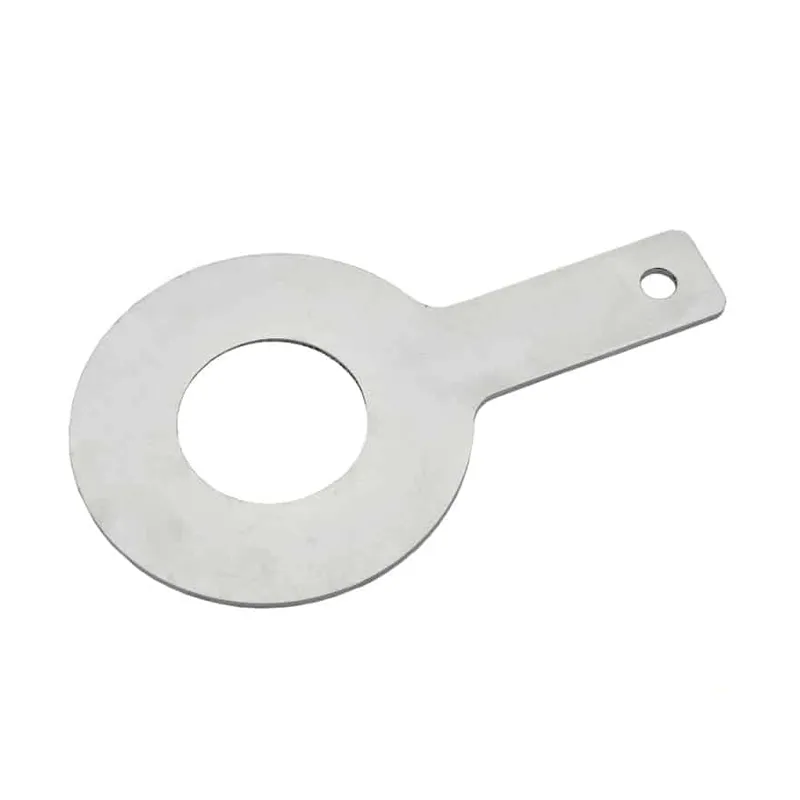
This stainless chromium-nickel steel needs no coating. It stays bright in water, in many aqueous solutions and in humid air. As a result, the disc does not seize in the flange, and the handle remains legible.
Economical alternative

The heat-resistant pressure vessel steel P265GH is designed for pressure and elevated temperatures. It suits lines made of non-alloy steel, as are common for steam, hot water, oil and gas. Where moisture and oxygen come together, it rusts. In dry or oily media this does not matter.
Other materials are available on request, for example 1.4571 for media containing chlorides. Tell us the medium, the temperature and the material of the flanges. We will then recommend the right design.
Venting
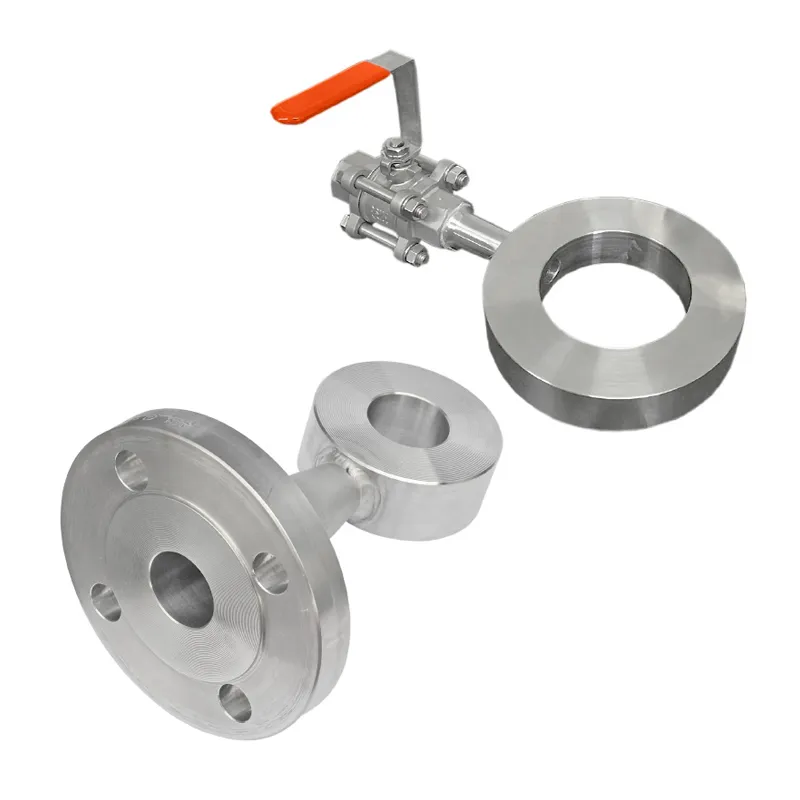
Some pipelines have no vent or drain point where one is needed. The paddle spacer with vent adds it afterwards. It is fitted between two existing flanges and carries a connection on the side. The line does not have to be cut or welded for this.
Standard
The ball valve sits on the outside of the ring. A bore connects it to the inside of the pipe. During filling, air escapes through it. Before work on the line, you release residual pressure and medium in a controlled way.
With flange connection
Instead of the ball valve, the ring carries a flanged nozzle. You can connect your own valve, a drain line or a measuring instrument to it. This turns the paddle spacer into an additional connection point in the existing pipeline.
The connection on the ring depends on your plant. Whether flange, butt-weld end, female thread or male thread: we fit the connection type that suits your line. We supply the accessories to your specification.
Tell us the nominal size, pressure rating and medium. Also let us know which connection type and which accessories you need. We will match the size and position of the connection to this.
Sealing face
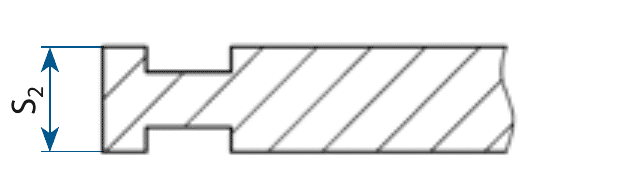
A line blind has to match the sealing face of the flanges between which it sits. As standard, it is flat on both sides. For flanges with groove or tongue to DIN EN 1092-1, we manufacture the mating form. If the flange has a tongue, the disc is given a groove on that side – and vice versa.
Flat · Standard
Flat and unmachined on both sides, optionally with raised face Form BB. Suits flanges with a flat sealing face or a raised face.
Groove – groove
A groove on both sides. The disc sits between two flanges with tongue.

Groove – tongue
A groove on one side, a tongue on the other. This is the form for the usual tongue and groove joint made up of one tongue flange and one groove flange.

Tongue – tongue
A tongue on both sides. The disc sits between two flanges with groove.
The paddle spacer is given the same form as the matching spade blind. This way, both fit into the same flanged joint and can be exchanged for each other.
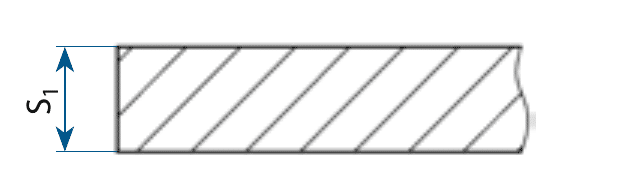
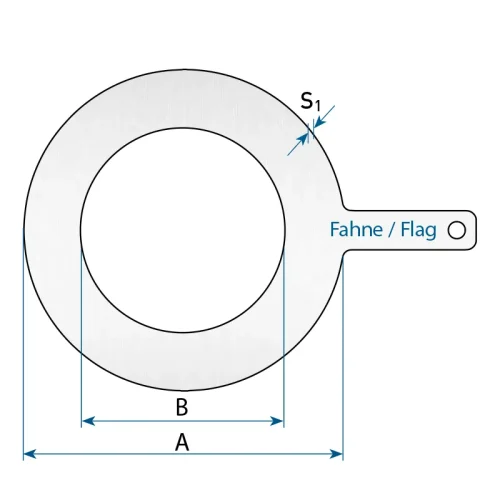
The dimension table gives the thickness S1 of the flat design. With groove or tongue, we determine the thickness separately and state it in the quotation.
Tell us the sealing faces of your flanges, for example Form C and Form D to DIN EN 1092-1. We will then supply the matching mating form.
Dimensions
∅ A is the outside diameter, ∅ B the free bore, S the thickness. All dimensions in millimetres.
| DN | ∅B | PN6 ∅A/S | PN10 ∅A/S | PN16 ∅A/S | PN25 ∅A/S | PN40 ∅A/S |
|---|---|---|---|---|---|---|
| DN10 | 16 | 39 / 4 | 46 / 6 | 46 / 6 | 46 / 6 | 46 / 6 |
| DN15 | 20 | 44 / 4 | 51 / 6 | 51 / 6 | 51 / 6 | 51 / 6 |
| DN20 | 25 | 54 / 4 | 61 / 6 | 61 / 6 | 61 / 6 | 61 / 6 |
| DN25 | 31 | 64 / 4 | 71 / 6 | 71 / 6 | 71 / 6 | 71 / 6 |
| DN32 | 40 | 76 / 4 | 82 / 8 | 82 / 8 | 82 / 8 | 82 / 8 |
| DN40 | 46 | 86 / 4 | 92 / 8 | 92 / 8 | 92 / 8 | 92 / 8 |
| DN50 | 58 | 96 / 6 | 107 / 10 | 107 / 10 | 107 / 10 | 107 / 10 |
| DN65 | 74 | 116 / 6 | 127 / 10 | 127 / 10 | 127 / 10 | 127 / 10 |
| DN80 | 86 | 132 / 6 | 142 / 12 | 142 / 12 | 142 / 12 | 142 / 12 |
| DN100 | 110 | 152 / 6 | 162 / 10 | 162 / 10 | 168 / 15 | 168 / 15 |
| DN125 | 136 | 182 / 8 | 192 / 10 | 192 / 10 | 194 / 15 | 194 / 15 |
| DN150 | 164 | 207 / 8 | 218 / 12 | 218 / 12 | 224 / 20 | 224 / 20 |
| DN200 | 215 | 262 / 10 | 273 / 12 | 273 / 15 | 284 / 20 | 290 / 25 |
| DN250 | 268 | 317 / 12 | 328 / 15 | 329 / 20 | 340 / 25 | 352 / 30 |
| DN300 | 319 | 373 / 12 | 378 / 20 | 384 / 20 | 400 / 25 | 417 / 35 |
| DN350 | 351 | 423 / 15 | 438 / 20 | 444 / 25 | 457 / 30 | 474 / 35 |
| DN400 | 402 | 473 / 20 | 489 / 20 | 495 / 25 | 514 / 30 | 546 / 40 |
| DN450 | 453 | 528 / 20 | 539 / 25 | 555 / 30 | 564 / 35 | 571 / 45 |
| DN500 | 503 | 578 / 20 | 594 / 25 | 617 / 30 | 624 / 40 | 628 / 50 |
Higher pressure ratings up to PN160 and larger nominal sizes are available on request, as are sealing faces of Forms B, C and D.
Enquiry
For a quotation we need nominal size, pressure rating and material. If you also need the spade blind, select the pair. Thickness and sealing face will then match. Add further sizes with “+ further item”.
In the shop
For standard sizes, the shop is the quicker route. You select nominal size, pressure rating and material and add the spacer directly to your basket.
To the paddle spacer in the shop →
Direct
+49 34956 39960
Monday to Friday, 7 am to 4 pm (CET)
You can reach us by email at info@industriefabrik.com.
Frequently asked questions
It holds the dimension. The flanged joint is bolted up to a specific overall height; if the spade blind is removed, exactly its thickness is missing. The ring replaces it so that bolts and gaskets remain unchanged.
The paddle spacer has the full pipe diameter and does not change the flow. The restriction orifice plate has a reduced bore and is meant to limit the flow. The two look similar, their tasks are not.
Technically yes, if you readjust the flanged joint every time. In practice no – bolt lengths and gasket seating would then have to be checked at every change.
Yes, on request. The handle is included as standard because it shows that a disc is installed – and, with paddle spacer and spade blind side by side, also which of the two.
For a quotation we need nominal size, pressure rating and material. If you need spade blind and paddle spacer as a pair, state both – we supply them in the same design.