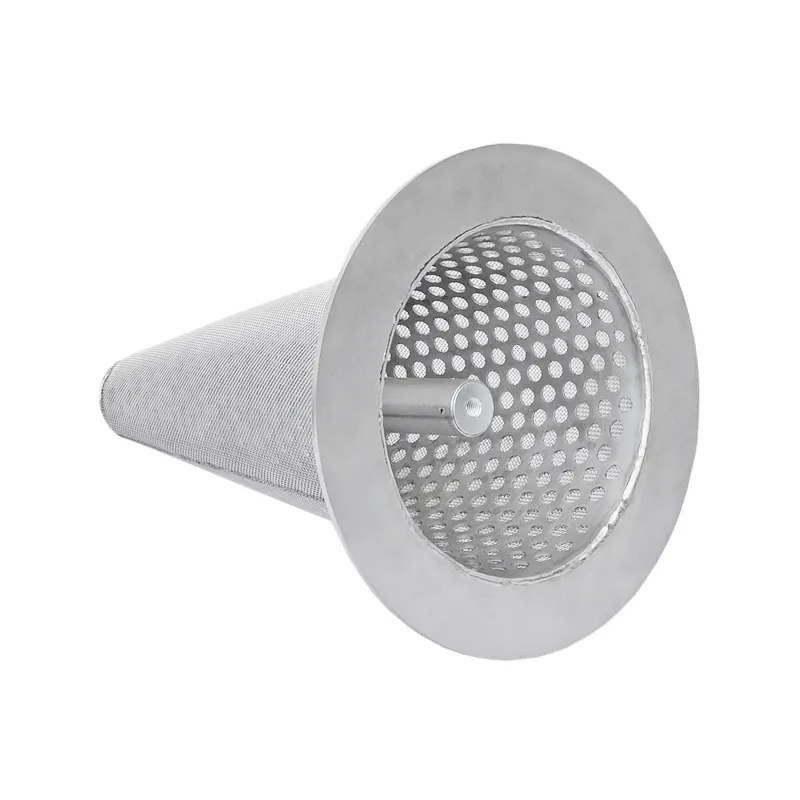
Magnetic strainers · Magnetic rods
Some contamination cannot be retained by any screen: magnetite from the heating circuit, fine abrasion from pumps and bearings, metal dust from machining. These particles are smaller than any reasonable mesh size – but they are magnetic.
That is why magnetic rods are fitted in the strainer element. They attract what passes through the wire mesh and are simply wiped off during cleaning. This turns the strainer into a magnetic strainer – without any change to the housing.
ISO 9001 · TÜV-approved welding shop AD2000-HP0 · PED 2014/68/EU
Why a screen is not enough here
In heating and cooling circuits, magnetite forms – black iron oxide sludge from corrosion of the pipelines. The particles are far below the range in which a wire mesh still works effectively. A finer screen would clog before it takes effect.
The same applies to abrasion from plain bearings, chips from machining and metal dust. Whatever is too small to be screened but magnetic – that is what the magnetic rod is for. It does not work across the cross-section but by attraction, and therefore creates no additional pressure loss.
Construction
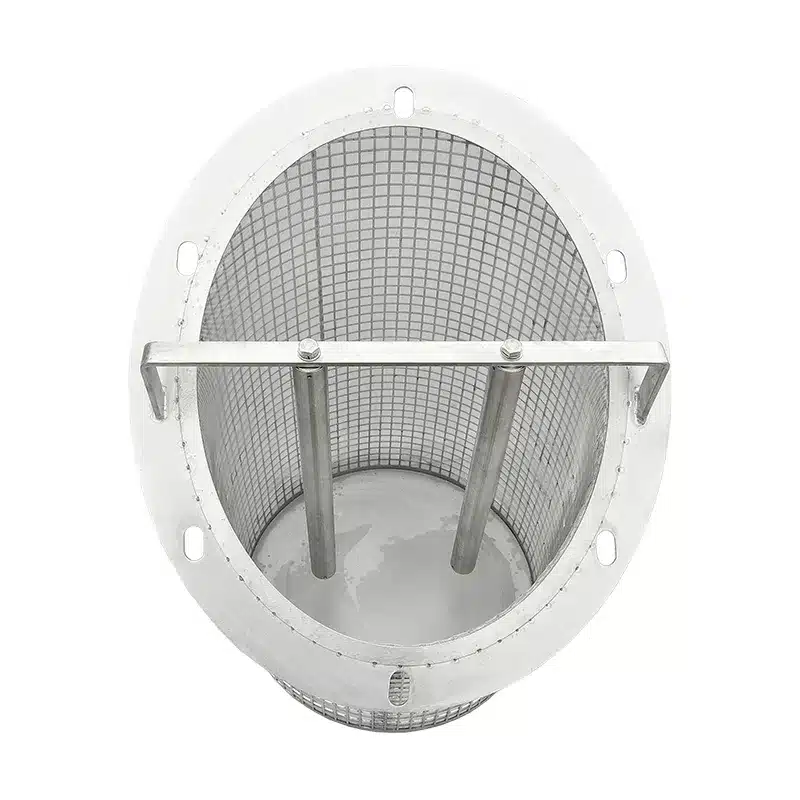
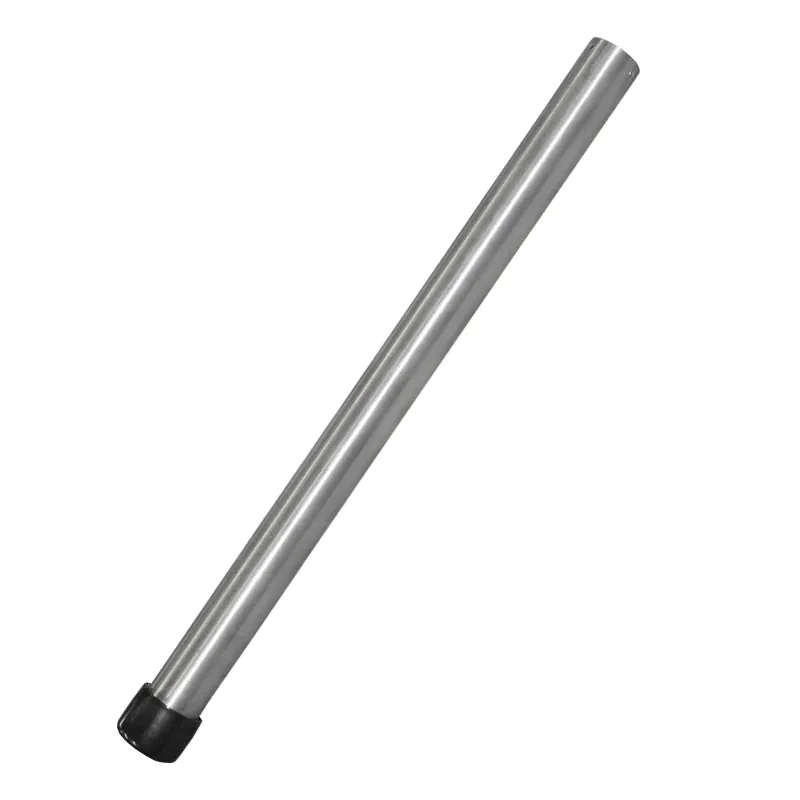
The magnetic rod is a closed stainless steel tube containing the magnets. On the outside it is smooth and resistant, on the inside it carries the magnetic force. This makes it washable and suitable for all media that the strainer itself can handle.
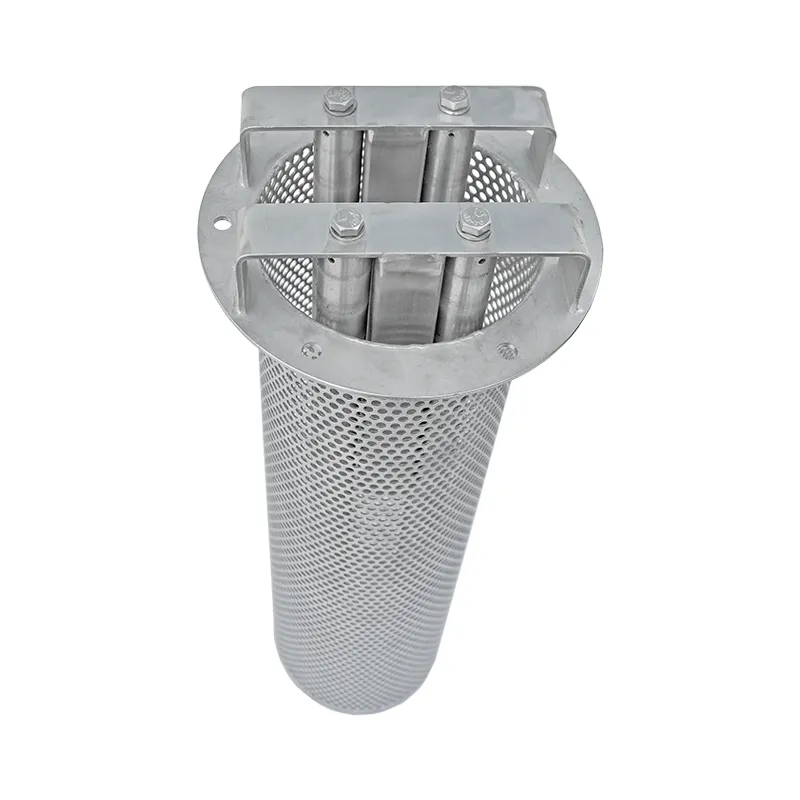
It is hung in the strainer basket – held by a bracket or a holder that is made together with the element. During cleaning, the rod comes out with the basket; the collected sludge is wiped off, then both go back into the housing.
In which strainer
Because the rod goes into the strainer element and not into the housing, the design of the strainer is of secondary importance. The nominal size determines how many rods fit: one in small sizes, two or more from medium sizes upwards.
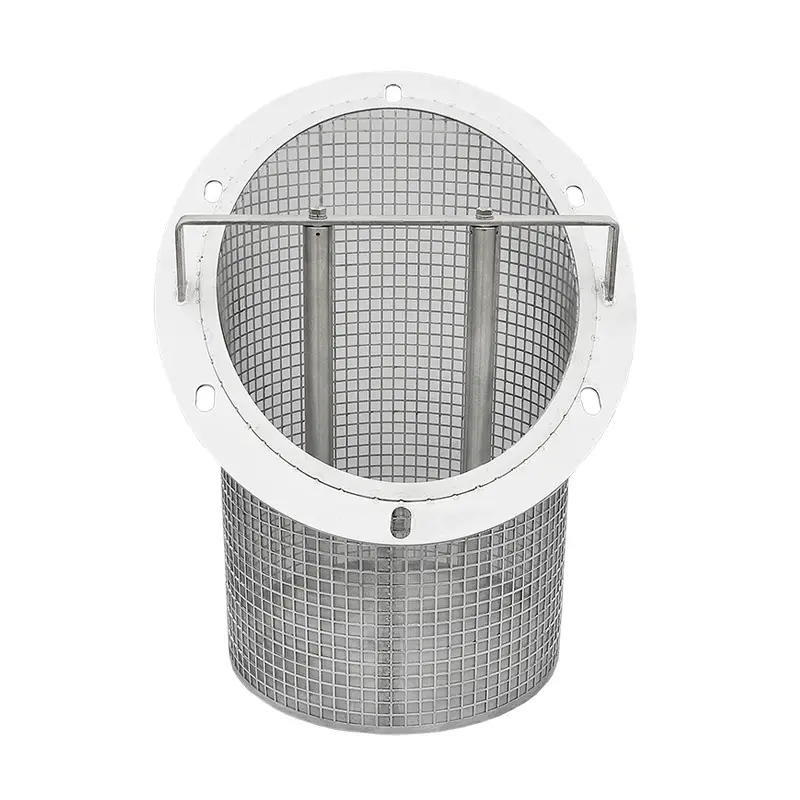
The most common combination. The basket offers space for several rods, and because the basket strainer is opened regularly anyway, wiping them off adds hardly any effort.
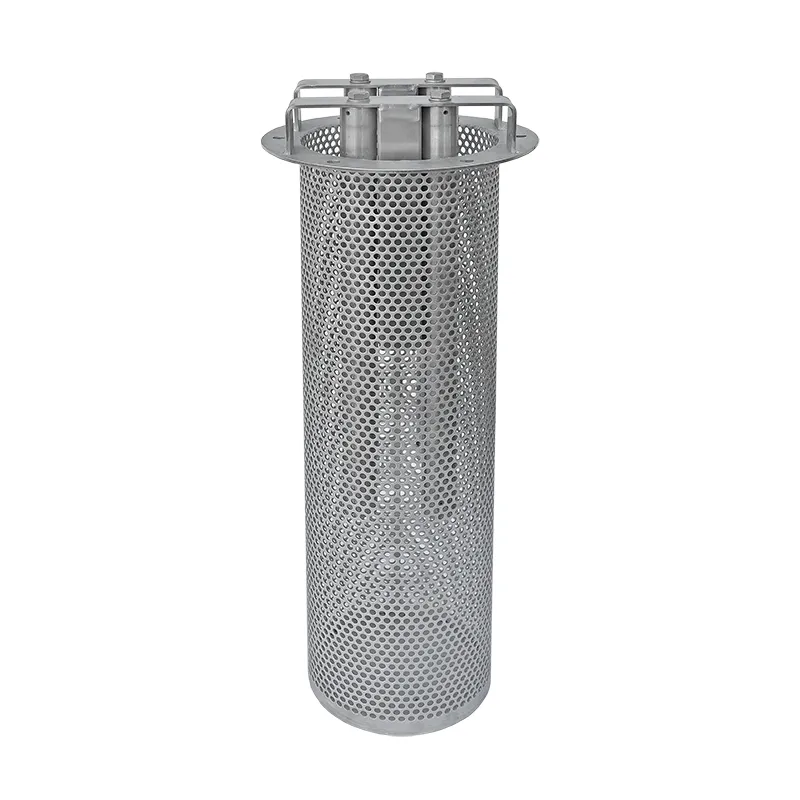
In the slim basket of the simplex strainer, the rods stand vertically side by side. In the duplex strainer, each chamber is fitted with rods – cleaning then takes place during operation.
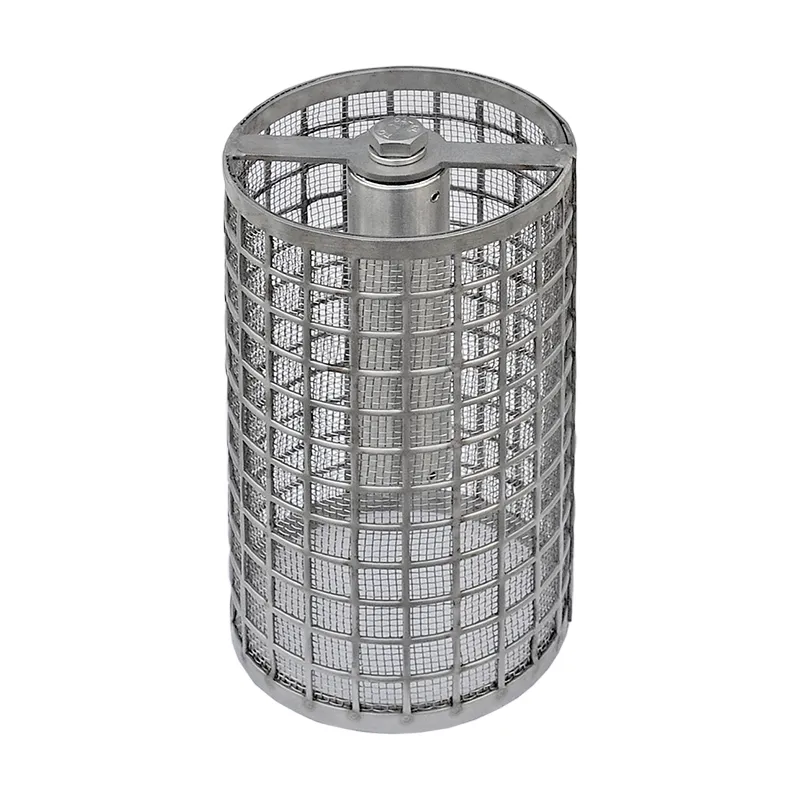
Also possible in the small designs, usually with one rod. Where installation space is tight, this is often the only way to remove magnetic particles at all.
To the designs: Basket strainer → · Simplex strainer → · Duplex strainer → · Pot type strainer →
Retrofitting
If you find black sludge settling downstream of the strainer, you therefore do not need a new strainer. In most cases a new strainer element with a holder for magnetic rods is sufficient – the housing stays as it is.
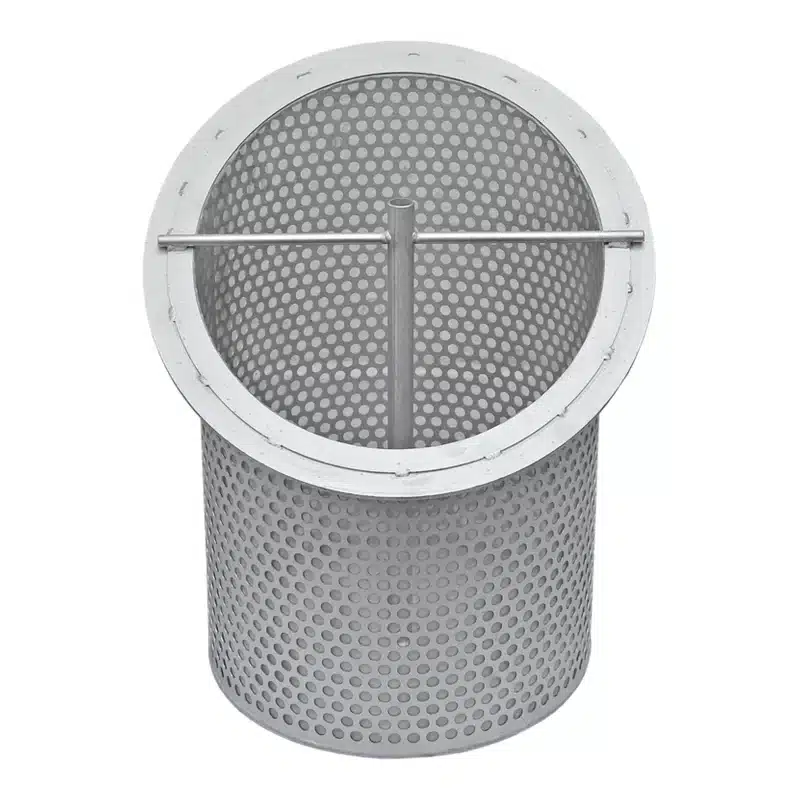
We make such elements to size, also for strainers from other manufacturers. We need the dimensions of the existing basket: outside diameter, height, rim design and the mesh size. A photo helps to identify the design and the space available.
Applications
Wherever there is iron in the circuit. And that is the case almost everywhere steel has been installed. The magnetic strainer is used most often in water: in heating and cooling water and in process water.
A special case is the start-up of a new plant: weld spatter and scale then occur in quantities that never appear again later. Magnetic rods catch what would pass through the screen.
Manufacturing
The magnetic rod is not simply put into a finished basket – the holder is part of the element design. Because we make the strainer elements ourselves, the configuration can be adapted to the nominal size, the available space and the cleaning routine.
This also applies to spare parts: a basket supplied without rods today can already come with the holder. Retrofitting later is then a matter of minutes.

No. With us, magnetic rods are a version of the strainer element: they are hung in the strainer basket of a basket, simplex, duplex or pot type strainer. The housing stays the same – the strainer becomes a magnetic strainer. The advantage is that rods can be retrofitted and removed again without touching the line.
Hardly. The rod works by attraction, not by narrowing the cross-section. It does take up some space in the basket, but the effect on the flow is small – unlike a finer mesh size, which increases the pressure loss considerably.
That depends on the nominal size and on how much magnetic load occurs. In small sizes one rod is enough; from medium nominal sizes, two or more are used. Tell us the nominal size and medium, and we will propose the configuration.
In most cases, yes – with a new strainer element with a holder for the rods. The housing stays. We need the dimensions of the existing basket: outside diameter, height, rim design and mesh size.
Together with the strainer basket. When the strainer is opened, the element comes out and the collected sludge is wiped or rinsed off. Important: this has to be done by hand – the dirt does not fall off by itself as long as the magnet is effective.
All basic types compared: Industrial strainers →
Tell us the design and nominal size of your strainer, the medium and – if available – the dimensions of the current strainer basket. You will receive a proposal for the element and its rod configuration, either as a new strainer or as a retrofit.