Four designs, one goal: dirt should stay in the line where it belongs. Which design is right is decided not by the catalogue but by the installation conditions. How much dirt is there? How hot does the medium get? How much space is available?
This article takes you to the right design with a few questions. It complements the overview Industrial strainers compared and puts the selection at the centre.
At a glance
| Basket strainer | Simplex strainer | Y strainer | T-type strainer | |
|---|---|---|---|---|
| Nominal size | DN50 to DN1000 | DN50 to DN500 | DN10 to DN500 | DN100 to DN1000 |
| Pressure rating | PN6 to PN40, high-pressure design up to PN63 | PN6 to PN40 | PN6 to PN40 | PN6 to PN40 |
| Temperature (standard) | −10 to +50 °C, others on request | −10 to +50 °C, others on request | depending on material | −10 to +400 °C |
| Strainer element | Support basket with fine mesh screen | Support basket with fine mesh screen | Screen in the angled branch | Perforated screen plate |
| Screen area | large | large, slightly smaller than the basket strainer | small | small |
| Typical for | a lot of dirt, large nominal size | small footprint | protecting individual components | high temperature, low installation height |
All values are standard values. Other designs are available on request.
Question 1 of 5
This is the most important question, because it determines the screen area.
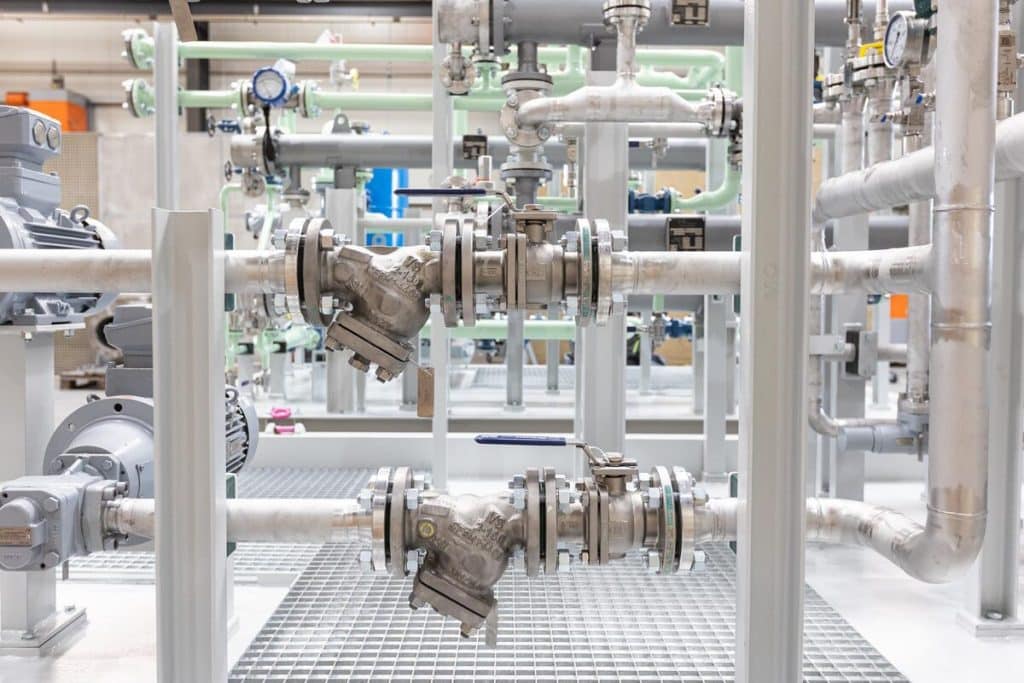
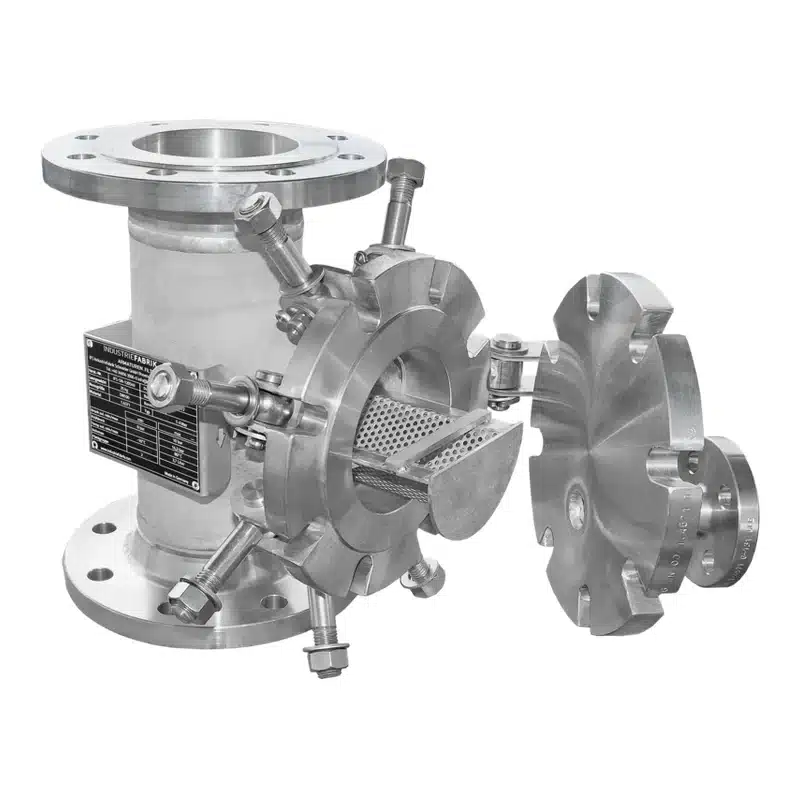
Little dirt, one component to protect: The Y strainer sits directly in the pipeline, the medium flows straight through. The screen lies at an angle in the branch. It needs little face-to-face length and can be cleaned without dismantling the line. Typical are pumps, valves, meters and heat exchangers.
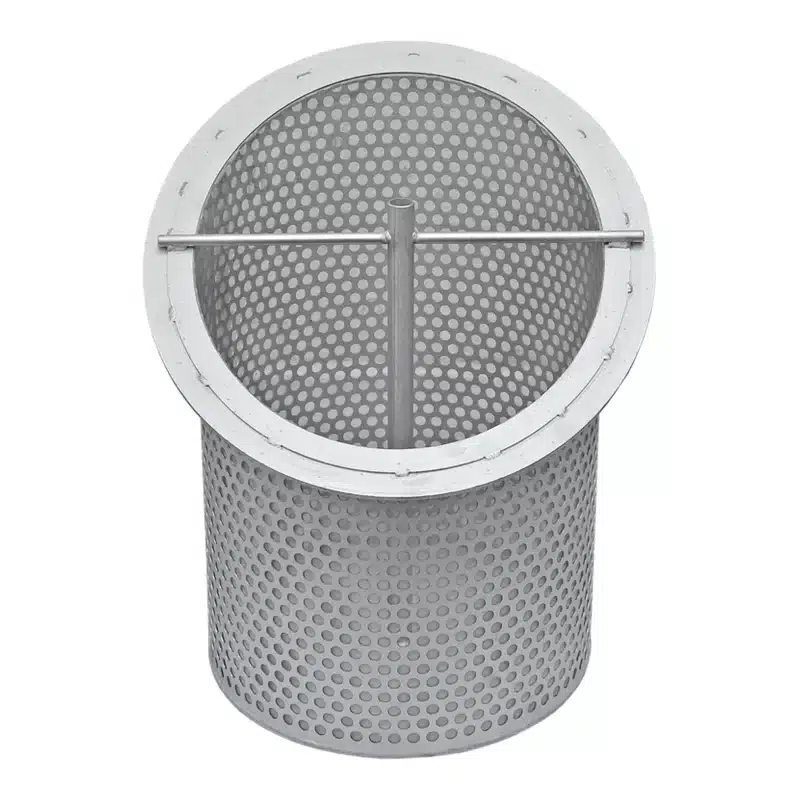
A lot of dirt, long service intervals: This is where basket-type strainers are right, the basket strainer or the simplex strainer. The basket offers a large screen area, and the strainer clogs more slowly.
The most common mistake: A Y strainer at a point with a heavy dirt load. Its screen area is small in relation to the nominal size. It clogs faster, and cleaning becomes a permanent task. Where frequent cleaning is needed, we recommend the basket strainer or the duplex strainer.
Question 2 of 5
As standard, basket strainers and simplex strainers operate from −10 to +50 °C. Other temperatures are available on request.
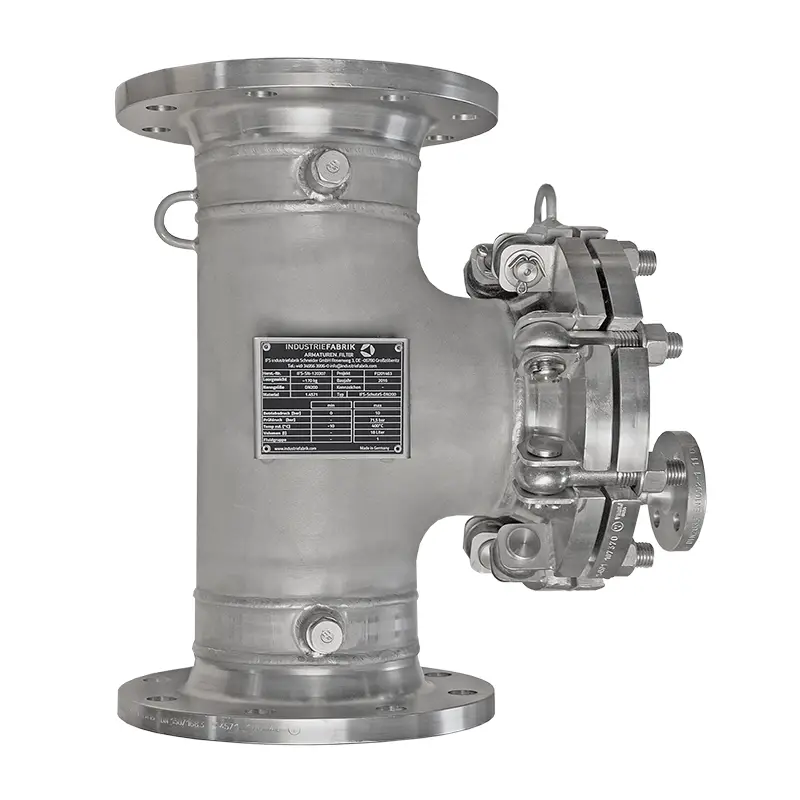
If it gets hotter, the T-type strainer is a solution of its own. As standard it is designed for −10 to +400 °C. Typical applications are steam and condensate, hot water and district heating, and thermal oil. At the same time, the temperature may rise by no more than 50 °C per hour; this applies equally to all basket-type strainers.
With the Y strainer, the temperature depends on the housing material. Please state it in your enquiry.

Question 3 of 5
The four designs need space in different places:
Question 4 of 5
Nominal size: The Y strainer starts at DN10, the simplex strainer at DN50. The T-type strainer starts at DN100. For DN50 to DN500, several designs are possible; above that, the basket strainer and the T-type strainer remain, up to DN1000.
Filtration grade: We manufacture basket strainers, simplex strainers and Y strainers with mesh sizes from 0.05 to 10 mm. As standard, the T-type strainer works with a perforated screen plate with holes from 1 to 10 mm; the standard is 3 mm. Finer grades are possible on request with wire mesh. It is therefore suited to coarser separation, not to ultra-fine filtration.
Comparison of the screen area for the same nominal size (standard design):
| Nominal size | Basket strainer | Simplex strainer | T-type strainer |
|---|---|---|---|
| DN100 | 1,270 cm² | 910 cm² | 210 cm² |
| DN200 | 3,350 cm² | 2,255 cm² | 705 cm² |
With the Y strainer, the screen area is smaller in relation to the nominal size than with a basket-type strainer. Where the area becomes tight, see Mesh size and filtration grade: a coarser screen extends the service interval.

Question 5 of 5
These designs are single strainers: for cleaning, the line is briefly isolated. The basket strainer is sufficient as long as this is possible.
If downtime is costly or the dirt load is high, we recommend the duplex strainer with changeover unit. It allows the screen to be changed during operation.
| Application | Obvious design |
|---|---|
| Pump, meter or valve in a heating or cooling water line | Y strainer |
| Steam and condensate upstream of control valves and steam traps | Y strainer; at high temperature and large nominal size, T-type strainer |
| Process water with a lot of dirt, large nominal size | Basket strainer |
| Protecting heat exchangers, small footprint | Simplex strainer |
| District heating, hot water, thermal oil in large nominal sizes | T-type strainer |
| Plant must not stop | Duplex strainer |
This is a guide. The design is determined case by case.
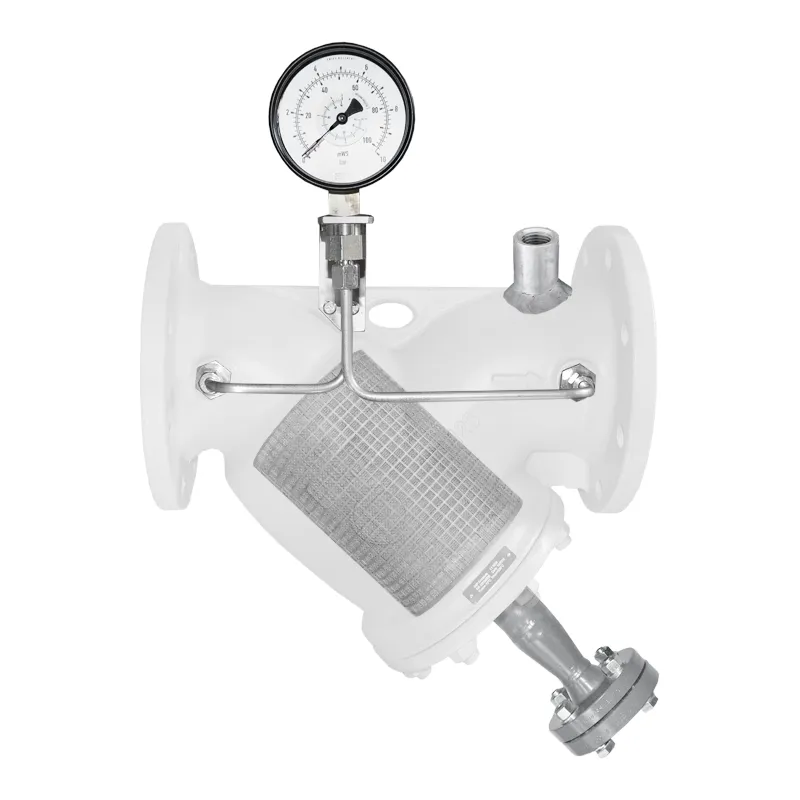
Then three things usually decide: the screen area, the service interval and the effort for cleaning. Options can also tip the balance, for example a differential pressure gauge, a heating jacket for viscous media or a quick-opening closure. You will find all options under Options.
We propose the design and submit a design drawing for your approval before manufacturing.
Tell us about your installation conditions. We will tell you which design fits.
Note: All information on nominal sizes, pressure ratings, temperatures and screen areas are standard values of the respective series. The design is determined case by case.